
Overview
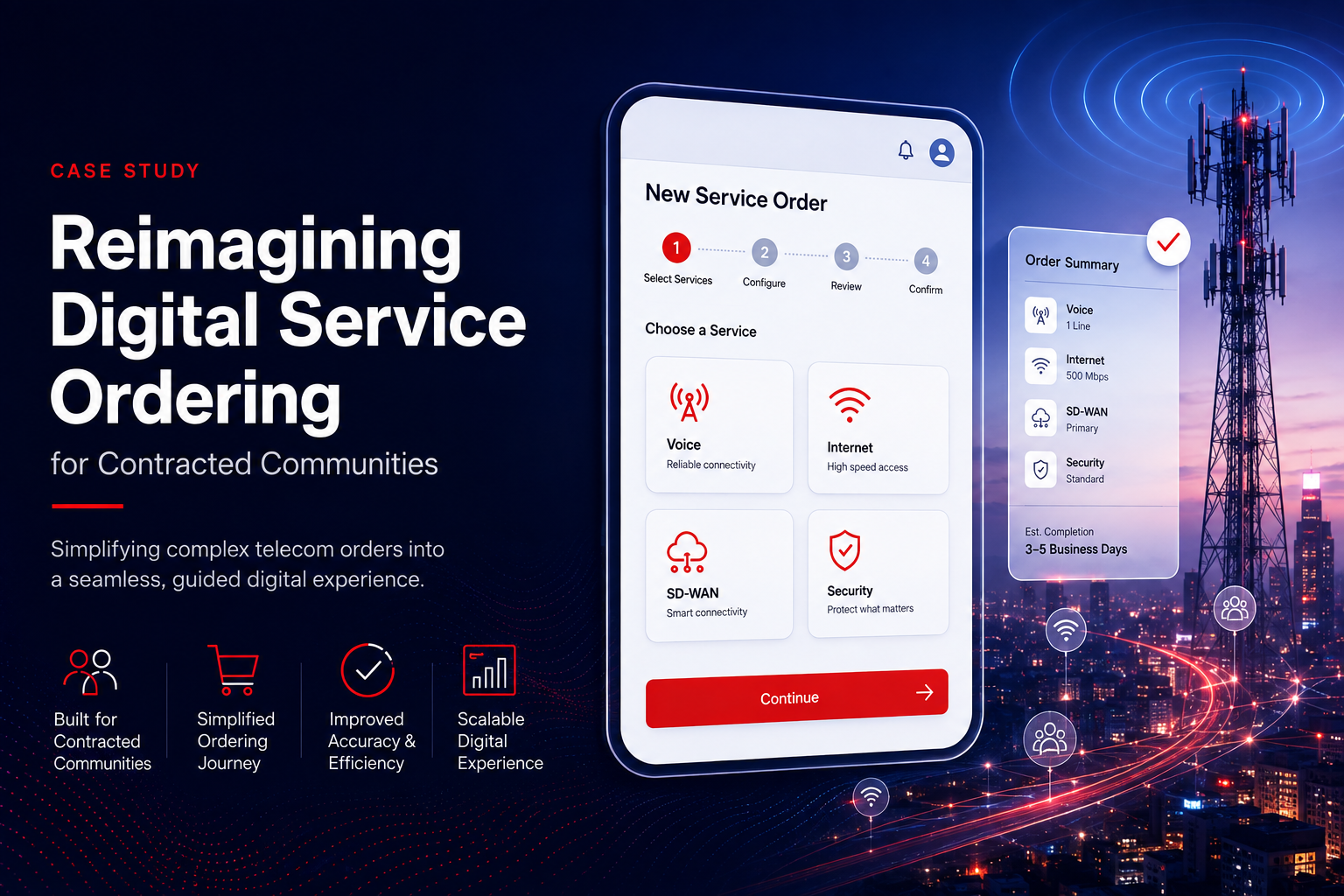
Designed an end-to-end digital acquisition experience for a large telecommunications provider, enabling eligible customers to discover and purchase services through a streamlined self-service journey.
The project involved translating complex business and eligibility requirements into a simple e-commerce experience while ensuring customers were presented with the right products, pricing, discounts, and checkout options based on their eligibility.
I worked closely with product, business, and engineering teams to simplify a complex ordering ecosystem, define key user flows, and create a scalable experience that balanced customer needs, business rules, and technical constraints.
My Role
- Led UX design across the acquisition and ordering journey
- Simplified complex business logic into intuitive customer experiences
- Designed product selection, pricing, cart, and checkout interactions
- Collaborated with cross-functional teams to validate requirements and feasibility
- Created user flows, wireframes, prototypes, and design specifications
- Supported design decisions through development and implementation
Impact
Created a more consistent, transparent, and self-service-oriented e-commerce experience, reducing complexity for customers while accommodating the underlying business and technical requirements.
Understanding the Contracted Community Model
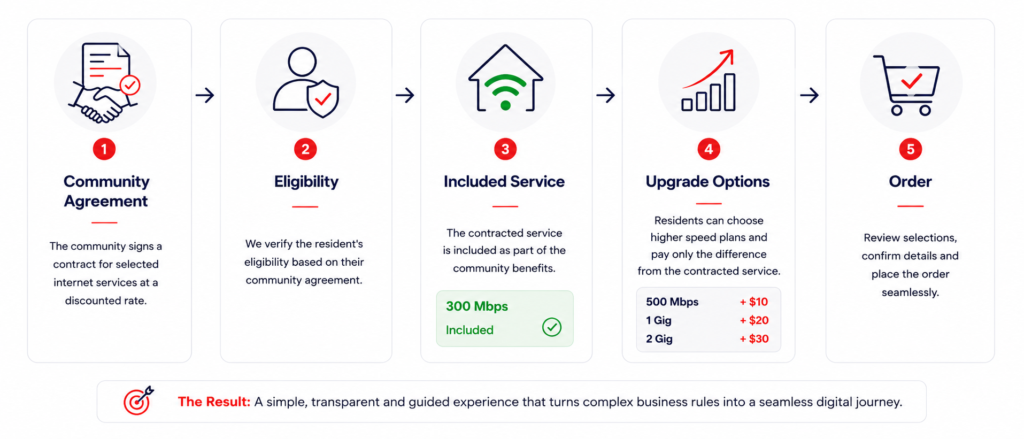
Unlike traditional telecom e-commerce, where customers purchase services directly, this model is based on an agreement between the community and the service provider.
The community pays for a contracted service at a negotiated rate, which residents receive as part of their community benefits. Residents can then upgrade to higher tiers by paying only the difference.
Example
300 Mbps — Included
500 Mbps — +$10
1 Gig — +$20
2 Gig — +$30
This meant customers weren’t starting with a traditional product catalog. Their community agreement determined their baseline service, available options, and upgrade pricing.
The UX Challenge
The challenge was to turn this complex business model into a simple e-commerce experience:
Customers shouldn’t need to understand the underlying business rules. They simply need to know:
What do I have? What can I upgrade to? How much will it cost?
This understanding became the foundation for the digital acquisition experience.
Translating Business Rules into UX
Once I understood the contracted-community business model, the next challenge was translating its complexity into a simple digital experience.
The business model introduced several rules around eligibility, contracted services, upgrades, pricing, and product availability. While these rules were essential to the business, exposing them directly to customers would make the experience difficult to understand.
My strategy was to move the complexity behind the experience and surface only what the customer needs to make a confident decision
This allowed us to preserve the complexity required by the business while creating a familiar e-commerce journey for the customer:
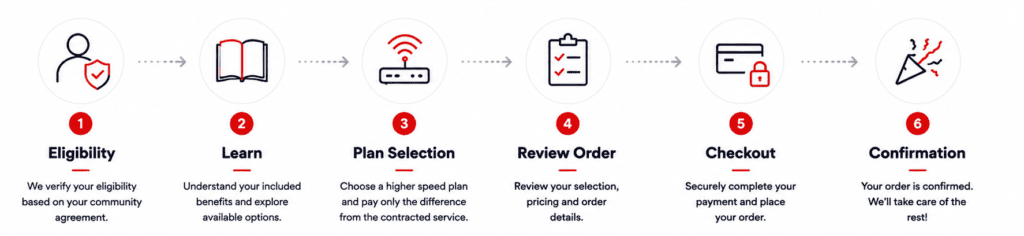
The result was a strategy where the customer could make a simple decision without needing to understand the complex business model operating behind it.
Understanding the questions that matter
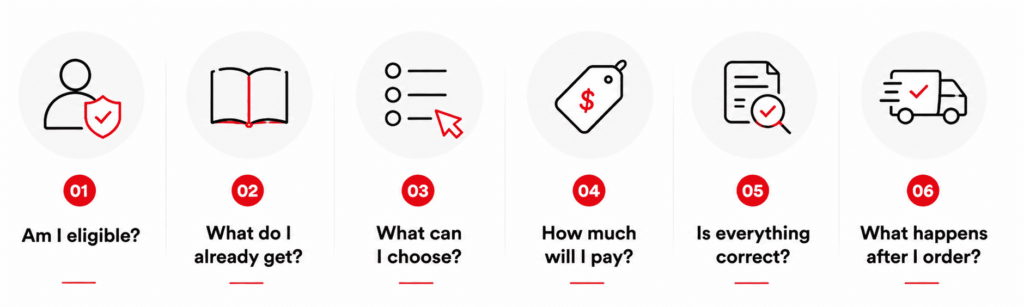
Before designing the flow, I mapped the experience around the questions customers naturally ask:
I designed the journey around the questions customers naturally have at each stage from eligibility and available benefits to plan selection, pricing, checkout, and what happens next.
Turning Complexity into Simple UX
The core design challenge was to translate complex business rules into a familiar, guided e-commerce experience without making the customer understand what was happening behind the scenes.
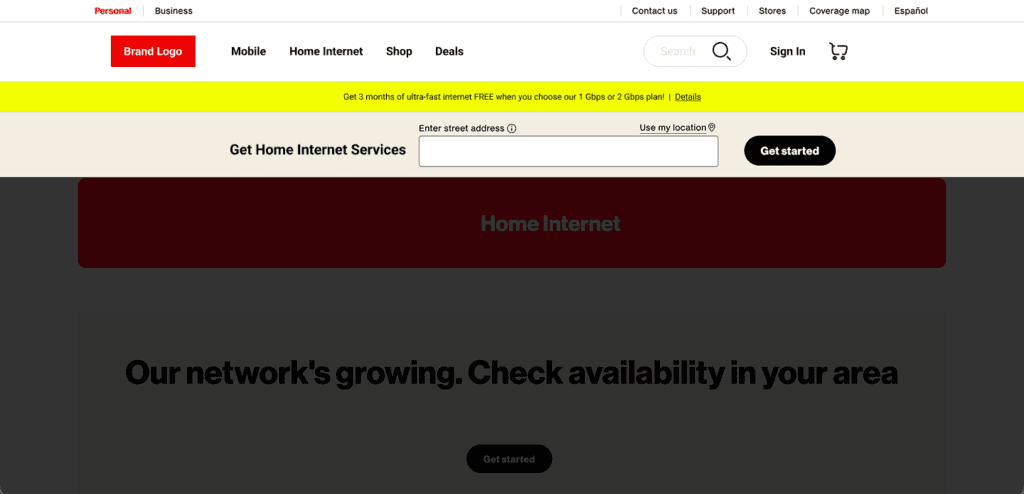
01. Start with address-based eligibility
Customers start by entering their service address to verify eligibility and identify the services available in their community. This creates a personalized starting point, ensuring customers see only relevant plans and options throughout the journey.
02. Clearly communicate what is included
Once eligibility is confirmed, customers can clearly see the services already included through their community agreement. This establishes a clear baseline, helping them understand what they already receive before exploring additional plans or upgrades.
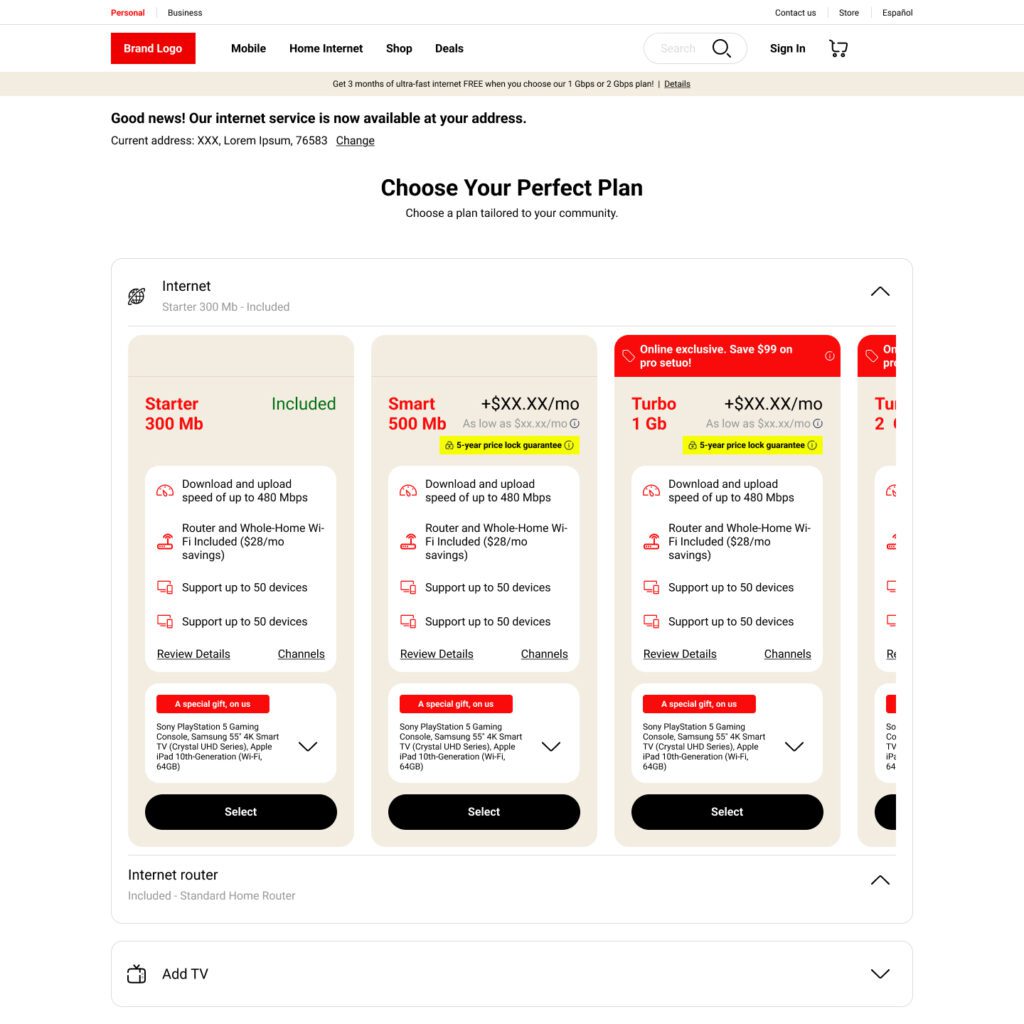
We tested two ways of presenting the community-provided service: “$0” and “Included.” Users strongly preferred “Included” because it immediately communicated that the service was part of their community benefits. Unlike “$0,” which focused on price, “Included” helped users understand what they already had and what they could upgrade.
03. Curate the choices
Customers see only the plans and upgrade options relevant to their community agreement, rather than navigating through the full product catalog. This keeps the decision simple while giving customers the flexibility to choose the service that best fits their needs.
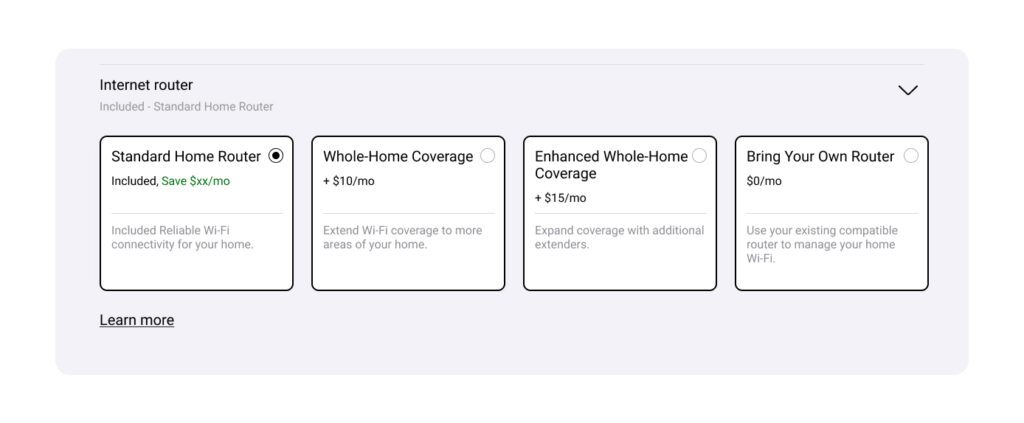
We also pre-selected eligible services based on the customer’s community agreement, eliminating the need for customers to manually identify and select their contracted benefits. This reduces effort, prevents incorrect selections, and creates a more guided and personalized experience.
04. Make upgrade value transparent
Customers can clearly see the additional cost of upgrading from their included service to a higher-tier plan. This makes the value of each upgrade easy to understand and helps customers make confident decisions without unexpected costs.
We presented upgrades as the difference from the included service, rather than showing the full retail price of each plan. As illustrated in the example above, customers can immediately understand the incremental cost of moving to a higher tier, making the upgrade value and pricing relationship clear at the point of choice.
05. Maintain consistency across the journey
Customers see their selected services, pricing, and benefits consistently from plan selection through review and checkout. This creates a predictable experience and helps customers feel confident that their final order reflects what they selected.
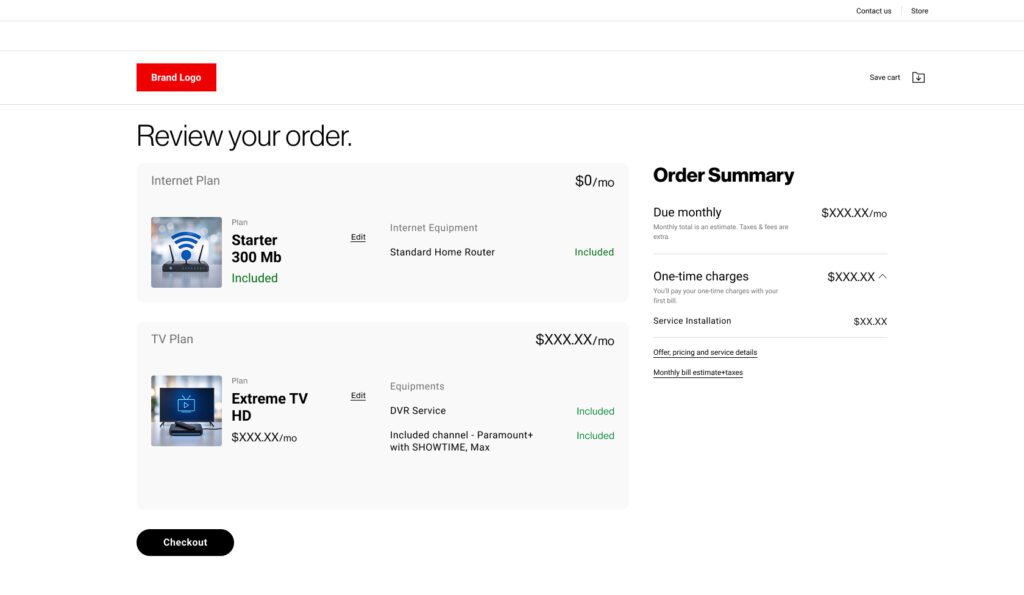
We maintained this consistency across the entire ordering flow from Plan Selection and Cart through Review Order, Checkout, and Order Confirmation. Product selections, included services, upgrade details, and pricing were carried forward consistently at each stage, giving customers a clear sense of continuity and reducing the need to re-evaluate their choices.
The Review Order stage brings all key purchase details together before customers commit. It gives them a clear view of their selected services, included benefits, upgrades, pricing, and applicable charges, while making it easy to identify and correct any changes. This final checkpoint helps customers validate their choices, avoid surprises, and proceed to checkout with confidence.
06. Prevent errors before they happen
The experience uses clear error messages, contextual notifications, required and optional field indicators, and guided interactions to help customers complete each step correctly. This reduces avoidable errors, provides guidance when something goes wrong, and creates a more forgiving and intuitive ordering experience.
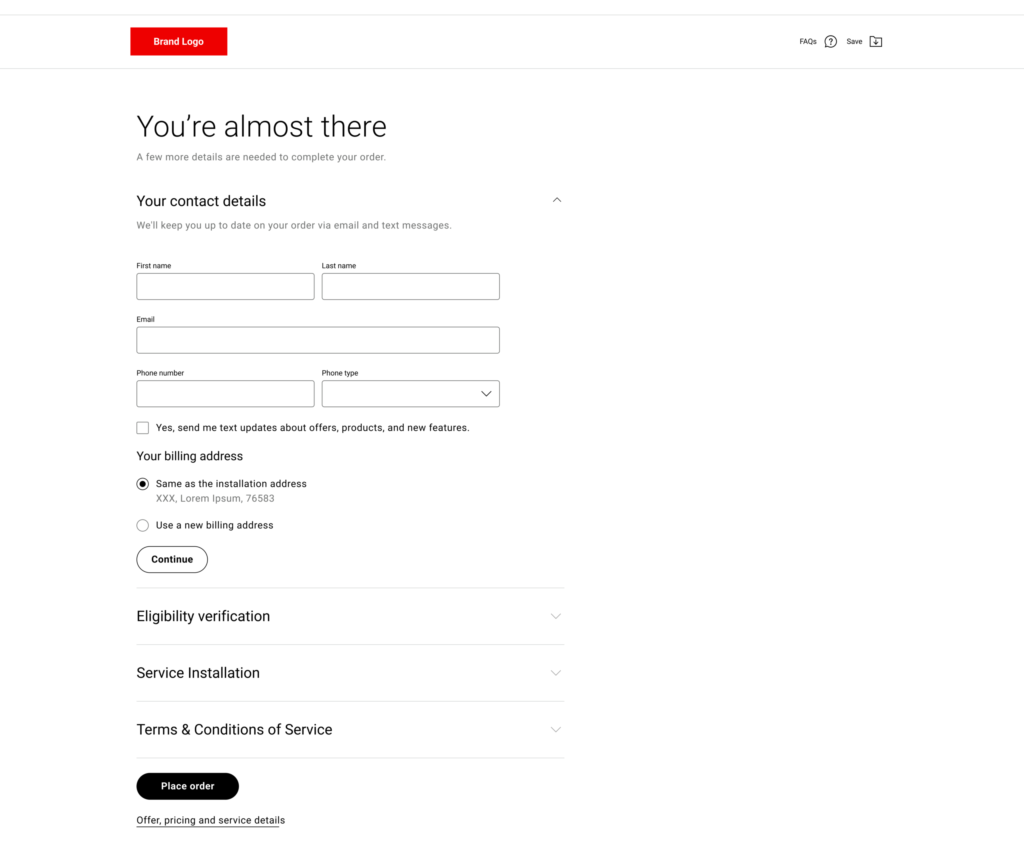
07. Simplify the checkout
The Checkout stage focuses on completing the order with minimal friction. Provide the required information, and submit their order through a clear, guided flow. By clearly distinguishing required and optional information and providing timely validation and feedback, the experience helps customers complete their purchase confidently and without unnecessary errors.
Cross-functional Design
Designing with the business, not just for the business
The experience involved a complex intersection of customer expectations, business requirements, and technical constraints. Designing the journey required close collaboration across Product, Business, Engineering, Architecture, and Operations.
My role was to bring these perspectives together and translate them into a clear, feasible, and customer-focused experience.
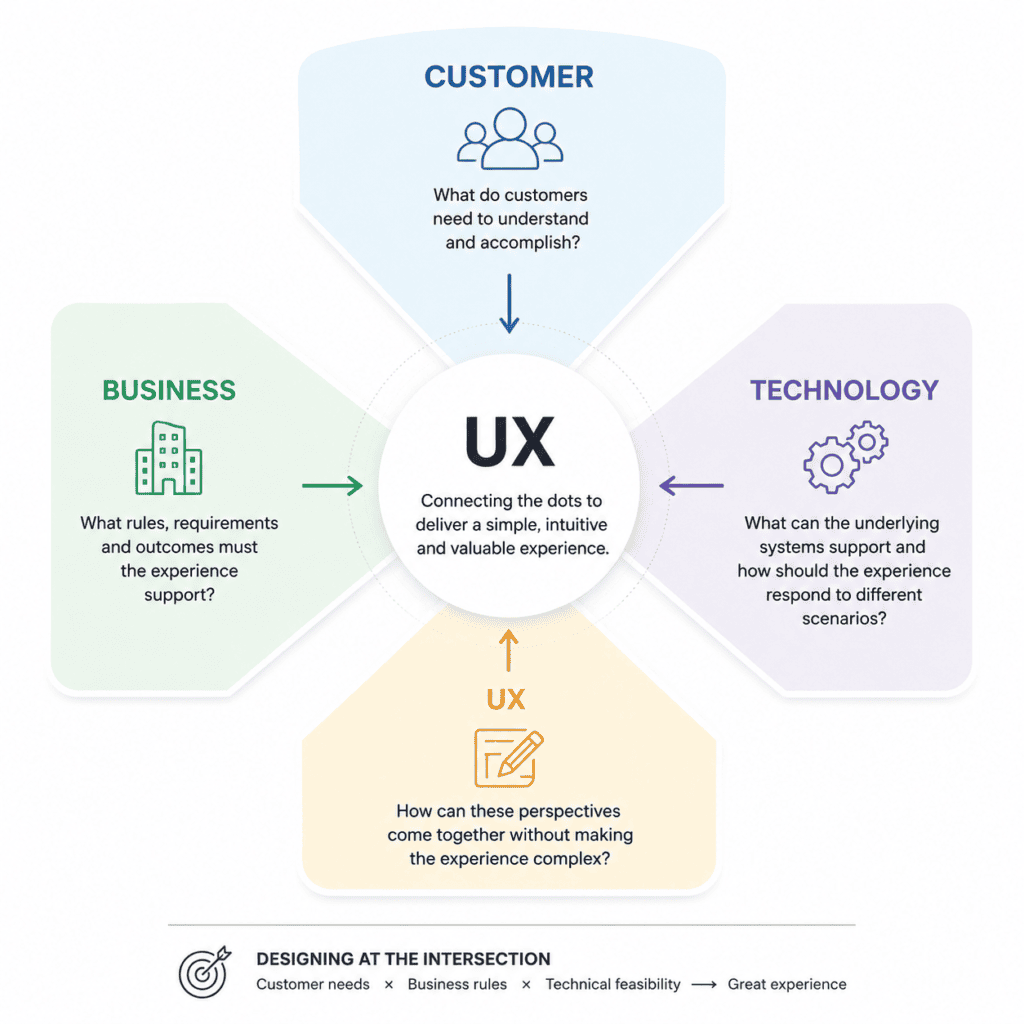
The best solutions came from designing at the intersection of what customers need, what the business requires, and what technology can deliver.
How I collaborated
Product & Business — Define the experience
Worked with Product and Business stakeholders to translate business goals and contractual requirements into customer journeys, product-selection logic, pricing models, and ordering flows.
Business Analysts — Map rules to customer scenarios
Partnered with Business Analysts to map business rules, validate customer scenarios, and identify edge cases, ensuring the experience reflected the right behavior across different conditions.
Engineering & Architecture — Design for feasibility
Collaborated with Engineering and Architecture to understand system capabilities, data dependencies, integrations, and technical constraints, shaping solutions that were both intuitive and feasible to implement.
From UX to Implementation
I worked closely with Engineering throughout the build to clarify requirements, resolve implementation questions, and refine scenarios where business rules or technical constraints influenced the experience. I also partnered through design QA to review the implemented experience, ensuring the interactions, content, visual details, and overall journey stayed aligned with the intended design.
Measuring Success
The experience transformed a complex, rule-driven service model into a simple and guided digital journey making it easier for customers to understand, choose, and complete their order while supporting the business and operational requirements behind the experience.
Customer Experience
- Simplified service discovery and plan selection
- Reduced decision complexity by presenting relevant options
- Improved transparency around included services, upgrades, and pricing
- Increased confidence through review, validation, and guided checkout
Business Impact
- Enabled a complete digital self-service acquisition journey
- Reduced reliance on assisted ordering channels
- Created a scalable experience model that could support different contracted-community scenarios
- Translated complex business rules into customer facing interactions without exposing the underlying complexity
Operational Impact
- Reduced avoidable manual intervention and ordering errors
- Improved consistency across ordering scenarios
- Embedded eligibility, product, and pricing rules directly into the digital journey
- Created a more predictable handoff from order placement to fulfillment
Key Takeaway
This was my first B2C e-commerce project and an opportunity to own the experience end-to-end from understanding the business model and defining the strategy to designing, validating, and supporting implementation. It taught me how business rules, customer needs, and technical constraints come together to shape a successful digital experience.
The project also strengthened my cross-functional leadership through close collaboration with Product, Business, Engineering, Architecture, and Operations. Most importantly, I learned to look beyond individual screens and design the complete customer journey, ensuring every interaction was purposeful, connected, and ready for real world implementation.
The Final Story
What started as a complex contracted community business model became an opportunity to create a simple, guided B2C e-commerce experience. From address-based eligibility and understanding included services to plan selection, review, checkout, and confirmation, every stage was designed to help customers make confident decisions without having to understand the complexity behind the experience.
As my first B2C project, I was involved end-to-end from business discovery and strategy through design, validation, cross-functional collaboration, and implementation. The experience strengthened my ability to connect customer needs with business goals and technical feasibility, while teaching me to think beyond screens and design the complete journey from the first interaction to a successful order.